


By Guardian Electrical Contractors LLC · Published .
Start with the driving you need to replace
No: buying an EV charger does not, by itself, prove that your home needs a panel upgrade. The useful question is what charging arrangement meets your driving needs and suits the electrical system. A photograph or an unused breaker space cannot answer that on its own.
Write down your normal daily mileage, when the vehicle arrives home and when it leaves again. Include unusually long days, a second vehicle and whether daytime charging is practical. The U.S. Department of Energy’s home-charging guide explains why overnight Level 1 charging can meet some drivers’ needs, while Level 2 may suit longer commutes or shorter parking windows. A suitable existing connection still needs to be established; this is not permission to use any convenient outlet.
Separate three questions about capacity
First, what does the vehicle need? Its charging capability and your available time help define the goal. Second, what does the selected charging equipment require? Its model, supported settings and installation instructions matter. Third, what can the property supply alongside its other loads? That requires an electrical assessment rather than comparing the largest numbers printed on two boxes.
A panel distributes power; the service is the broader supply arrangement. More breaker spaces do not automatically add service capacity. An assessment may support a new charging circuit, identify other electrical work or establish a need for a wider panel and service upgrade. Ask the proposal to explain which finding supports each part of the work.
Treat charging settings as part of the installation
A charger’s maximum advertised rate is not automatically the operating setting your installation should use. A supported lower setting may fit the charging goal, but it must also suit the circuit, equipment and assessed supply. Changing an app setting does not independently establish that the wiring is suitable.
Tell Guardian the exact vehicle and charger model before purchasing equipment or requesting a larger circuit. Ask how the agreed operating limit will be established and documented. Do not remove electrical covers, increase settings beyond the installed arrangement or use an extension cord as a substitute for a planned connection. Our EV charger installation service explains the installation scope, routing and handover separately from this planning question.
What Horry County’s residential checklist requests
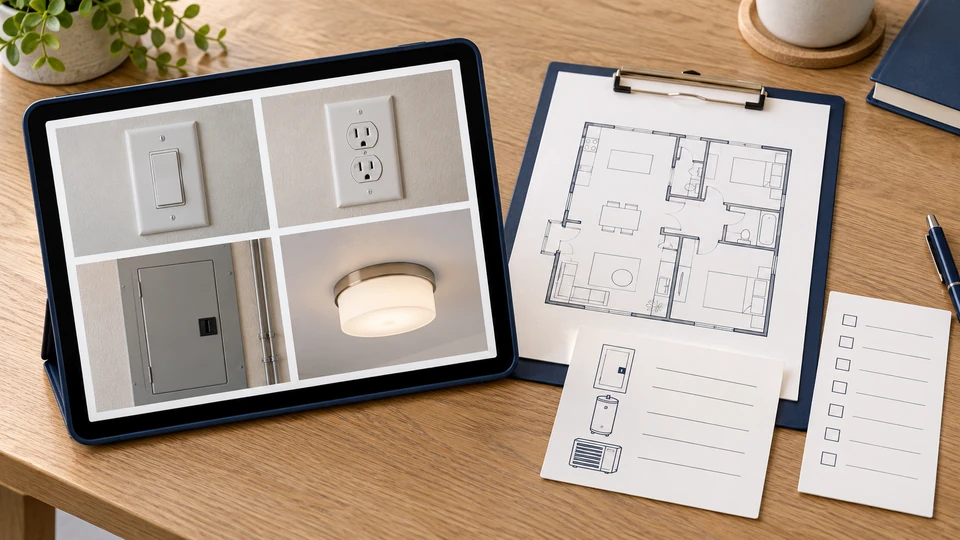
For a property handled by Horry County, its Residential EVSE Checklist, revised April 21, 2026, asks for the charger’s make, level, voltage and maximum rating; existing service and panel information; calculated demand; utility peak-demand documentation; and the proposed circuit and total load. It calls for the full manufacturer’s installation specifications and color photographs of the existing equipment and proposed charger location.
The checklist also addresses adjustable settings and asks for panel photographs with covers both on and off. Leave covers in place: Guardian handles any necessary internal-equipment documentation during the professional assessment. The form states that commercial/nonresidential and Level 3 systems require designs prepared by a licensed registered design professional. Confirm the applicable submission with the responsible office; the residential checklist is not a substitute for a commercial design.
A hypothetical example: the same car, different needs
Imagine two households considering the same charger. One driver has a short daily trip and a long overnight parking window. The other drives farther and arrives home shortly before the next departure. Their charging goals may differ even though the charger box is identical.
Neither household’s schedule proves that a panel upgrade is necessary—or unnecessary. The electrical assessment still determines suitable options. Ask what each option accomplishes, how it affects charging time and which costs arise from the wiring route versus changes to the existing supply. This example illustrates the questions; it is not a Guardian job report or a design for either home.

Bring information that helps the decision
- Vehicle and charger model, plus the manufacturer’s instructions or product link.
- Typical mileage, parking hours and any plans for another EV.
- Proposed parking position and a photo of the charging location.
- A safely accessible exterior view of the closed panel and visible labels.
- Your electric provider and any records requested during assessment.
Use our Grand Strand permit-office guide to distinguish city and county responsibilities. Your address and project scope determine the next permitting questions. Request a quote that separates the charging equipment, electrical installation and any supported service changes.