
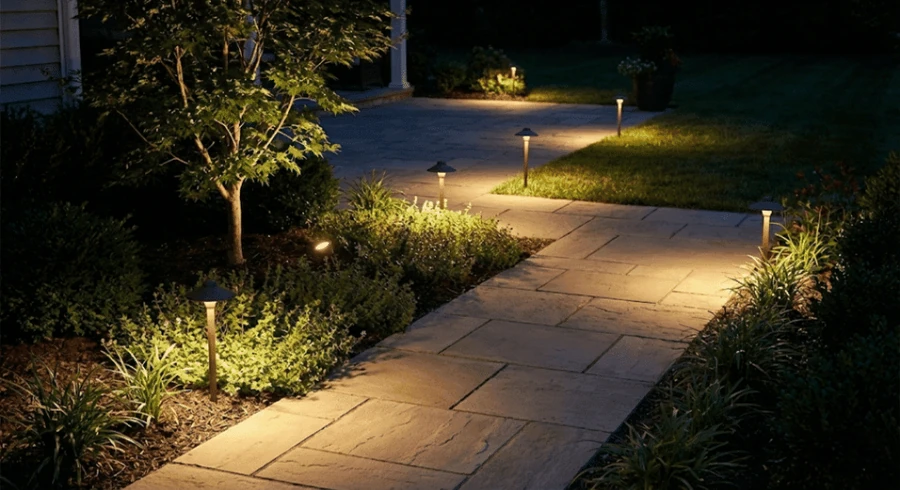


By Guardian Electrical Contractors LLC
Plan the activity before choosing the fixture
Mark entrances, steps, paths, parking and outdoor seating on a simple sketch. Identify where you need to see a change in level, locate a lock or move between the car and door. Decorative lighting can be considered alongside those practical needs, but it should not obscure the reason for lighting a space.
Record what bothers you about the existing arrangement. Perhaps a fixture shines into a bedroom, a path remains dark or a sensor activates at the wrong time. These observations help define the result you want instead of starting with a shopping list of brighter fixtures.
Discuss direction and control as well as brightness
The Department of Energy's guidance on light at night discusses using light where and when it is needed and limiting unwanted effects. Fixture placement, shielding and controls deserve attention alongside light output. More light aimed in the wrong direction may not make a walking route easier to see.
Tell Guardian which lights should operate on a schedule, respond to activity or be controlled manually. Explain who needs to change the settings. A complicated app arrangement may not be the best fit for a property where several people manage access or where reliable manual operation matters.
Choose equipment for the actual exposure
For a coastal property, tell the installer whether a fixture is sheltered, exposed to rain or positioned where spray and maintenance activity are concerns. Ask the manufacturer or supplier about suitability for that environment, care instructions and warranty exclusions. A coastal-looking finish is not proof of an appropriate environmental rating.
Existing boxes, connections and mounting surfaces need assessment when fixtures are replaced. Do not assume that installing a new light resolves deterioration in the equipment supporting it. Keep suspect equipment out of use and leave electrical inspection to the professional.
Leave a practical maintenance route
Consider how a lamp, driver or fixture could be serviced later. Landscaping, gutters, screens and roof access can affect the work. Identify which items are replaceable and whether a failed component means replacing the whole fixture. Ask where the controls and documentation will be left at handover.
- A sketch showing entrances, paths and current lighting.
- Photographs showing the mounting areas from a safe position.
- Any concern about glare into windows or neighboring property.
- Preferred schedules and who will operate the controls.
- Planned landscaping or construction near the wiring route.
Connect the plan to your property
For a Pawleys Island, Murrells Inlet or Surfside Beach project, share the address and any property-management requirements before the scope is finalized. Guardian can discuss fixture installation, controls and the associated electrical work. Confirm the specific equipment and responsibilities in the proposal rather than relying on a general promise of “coastal-grade” lighting.
Discuss the work for your property
For scope and service details, see Landscape & Security Lighting. Guardian travels to customers from its Myrtle Beach base. Local service information is available for Pawleys Island, Murrells Inlet, Surfside Beach.
Prepare for an electrical project, or send your project details to discuss the next step.