207 Atlas Drive, Myrtle Beach, SC 29579
Calls answered 24/7
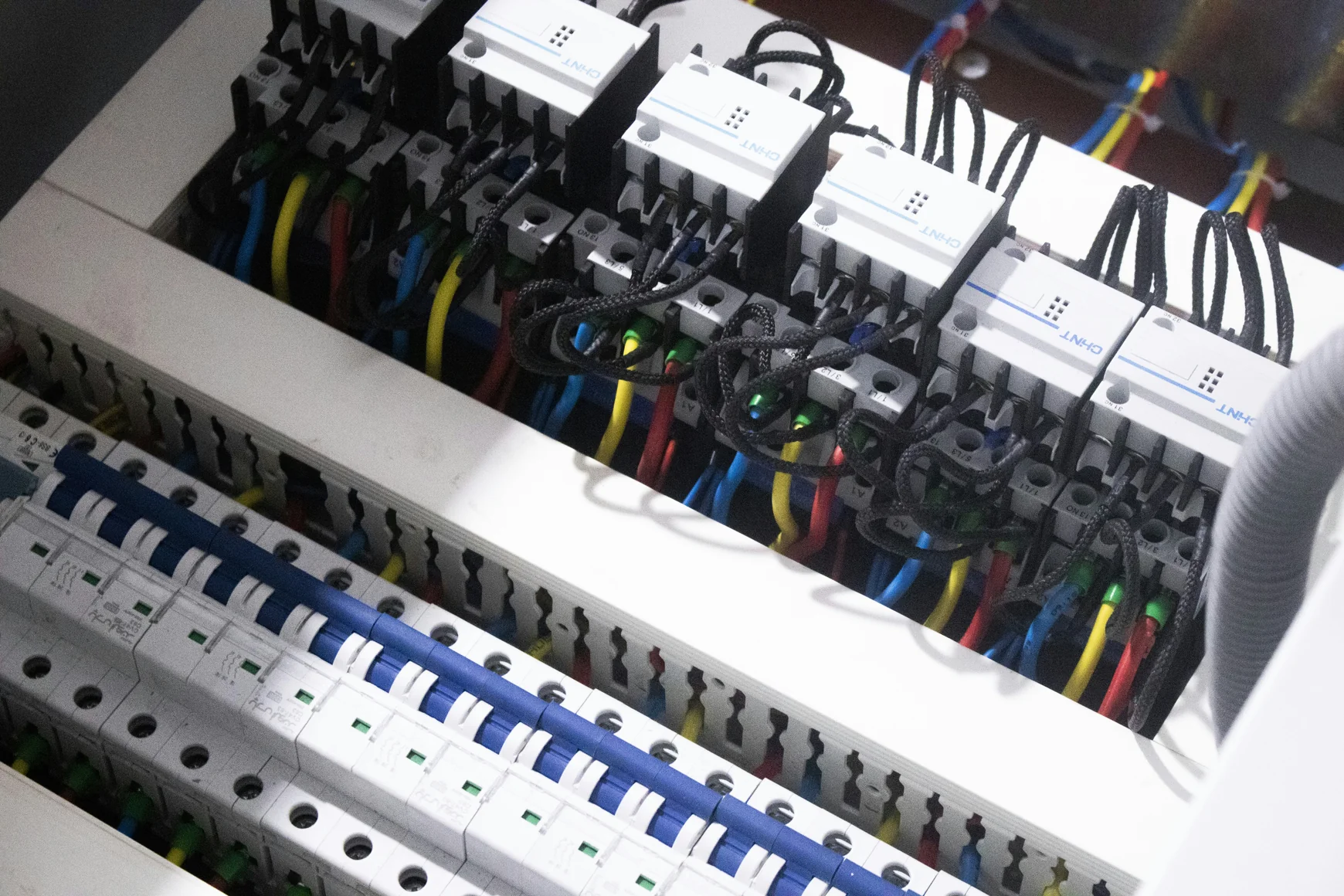
A breaker that trips is a symptom to investigate, not an automatic instruction to replace it. Guardian provides circuit breaker replacement after reviewing the circuit, panel condition and equipment compatibility. We also select suitable protection when a new circuit is part of the agreed work.
On this page: Project details · Common questions
Trace the reported symptom
Describe what stops working, which rooms or devices are affected and when the issue occurs. We check the affected circuit within the agreed diagnostic scope.
Explain the cause and repair options
Distinguish a device problem from wiring, circuit loading or supply issues before recommending the correction.
Confirm scope, permits and scheduling
We identify permit and inspection requirements for the property jurisdiction. Utility coordination is included when the work affects its equipment or supply. You receive the proposed scope before approving the work.
Complete the work and check operation
We complete the agreed electrical work, test the relevant installation and explain operation, findings and any follow-up. Required official inspections are a separate part of completion.
A tripped breaker fix or blown fuse repair starts with identifying the protective equipment, the affected circuit and the reported problem. A breaker and a fuse are different devices, and a repeated operation needs assessment of the cause rather than an assumption that a replacement alone will resolve it.
For circuit breaker replacement, provide the panel identification from a safe exterior view, affected areas and when the problem occurs. Do not open the enclosure, bypass protection or keep operating visibly damaged equipment to gather details.
The visible number usually identifies an amp rating; pole count and any AFCI (arc-fault protection that detects certain hazardous arcing patterns to reduce electrical fire risk) or GFCI (ground-fault protection that interrupts certain current leaks to reduce shock risk) function are separate details. A main breaker can control a much larger part of the property than a branch-circuit breaker. The example ratings in this illustration are identifiers, not recommendations for your wiring.
Tell us whether one room, a major appliance or most of the property loses power. Read labels only when safely visible, and leave the panel cover in place. Switching a main breaker off does not establish that every part of the equipment is de-energized; utility-side connections and other power sources require professional assessment.
Standard circuit breakers provide overcurrent protection for overloads and short circuits. On a typical residential 120/240V supply, a single-pole breaker commonly serves a 120V circuit. A two-pole breaker is commonly used for 240V equipment, with the required arrangement determined by the circuit and equipment.
Pole count, amp rating and protective features describe different things. A two-pole breaker is not simply a way to double the usable capacity of an existing outlet. Wiring, equipment requirements and the panel’s approved arrangements must be considered together.
An AFCI breaker adds detection of dangerous arcing associated with electrical fires. A GFCI breaker adds protection against ground-fault shock hazards. A dual-function breaker combines these two protective functions as well as its overcurrent protection.
“Combination AFCI” is a different term: it refers to protection against both series and parallel arcing, not automatically to GFCI protection. Guardian identifies the actual device and circuit rather than choosing a replacement by the color of a test button.
A breaker must be suitable for the exact panel and application. Matching appearance, width or brand name alone is not enough. Manufacturer labeling and applicable listed or classified compatibility documentation govern the selection; some specifically classified replacements are approved for identified panels from other manufacturers.
Do not install a higher-rated breaker to stop repeated trips or replace a protective type with a standard breaker to avoid its warnings. The cause may be the load, wiring, connected equipment or the protective device itself. Diagnosis comes before a remedy.
Some panels permit particular tandem breakers in designated positions. They can provide circuit positions in an approved arrangement, but they do not increase the service or feeder capacity. Panel labeling and the planned load still govern.
No. AFCI protection addresses certain arcing faults; surge protection addresses transient voltage events. Neither replaces the other’s function. See our surge protection page for that separate service.
Not necessarily. It may be responding correctly to a fault or excessive demand. Guardian reviews the symptoms and circuit before recommending replacement.
That depends on the panel, circuit arrangement and available approved equipment. We review suitable options instead of assuming every protective breaker fits every panel.
A breaker replacement and a panel repair or replacement are separate scopes. Damage at the equipment or connection may require wider work, which should be explained before proceeding.
Guardian offers free quotes for planned projects. A fault-finding visit or service call can involve a diagnostic charge, explained before booking. Access, equipment requirements and the work identified determine the proposed repair or installation scope.
Share the property address, the problem or project you have in mind, and equipment details when available. Photos of accessible equipment and the work area can help us plan the next step. Do not remove electrical covers or expose wiring to take photographs.
Guardian Electrical Contractors LLC is based in Myrtle Beach and serves Horry and Georgetown counties. SC CLM.119159 · Insured and bonded · Veteran-owned.
Project quotes are free. Diagnostic and service-call charges are explained before booking. Calls are answered 24/7; call to confirm availability and scheduling.
For a panel project in Conway, Carolina Forest or Myrtle Beach, share planned appliances and existing symptoms. Tell Guardian which occupied areas or equipment need advance notice of a power interruption.
Guardian serves Myrtle Beach, Conway, Carolina Forest and communities across Horry and Georgetown counties. See how quotes and diagnostic visits work, our credentials and project planning guides before arranging the next step.